Negative Ionization
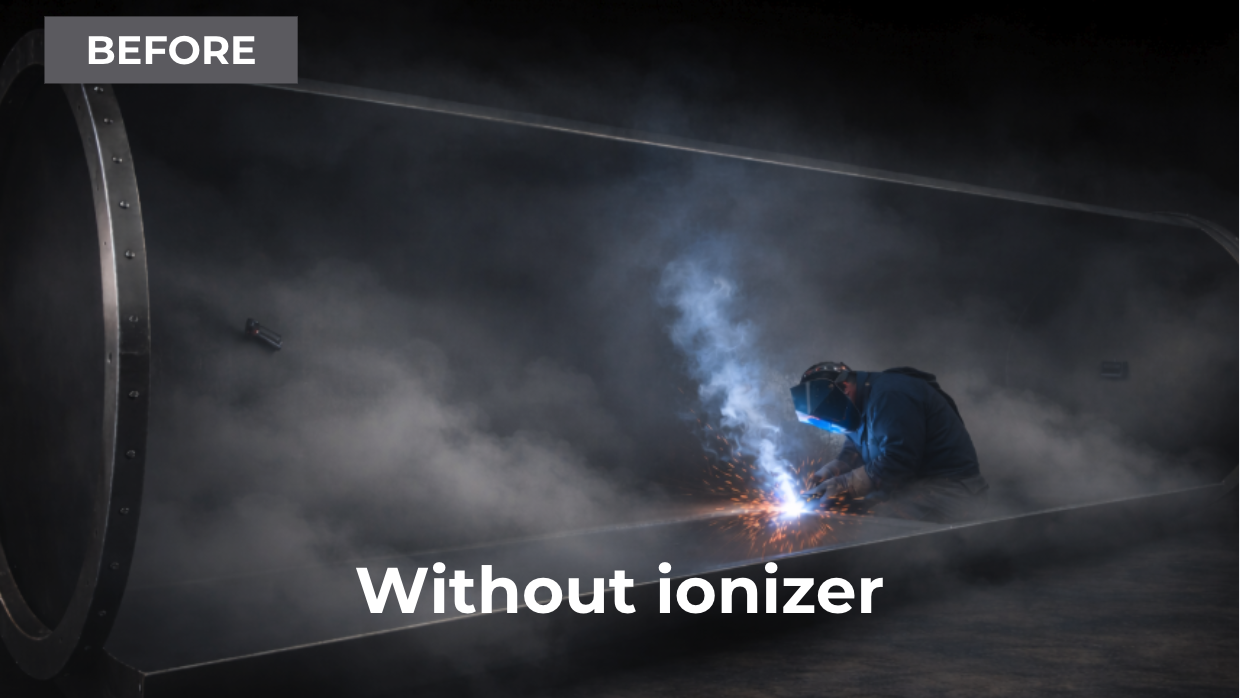
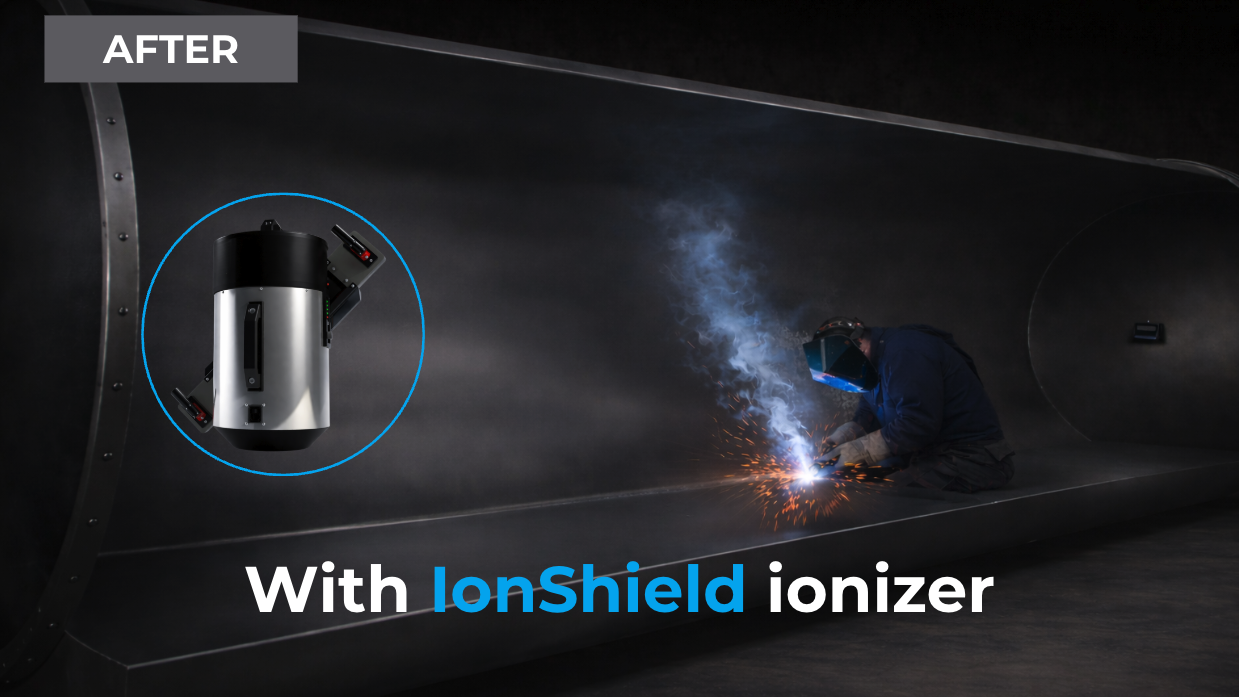
The system generates negative ions that bind to harmful particles present in the air. This process modifies the electrical charge of the particles and promotes their agglomeration.
HOW IT WORKS
1 – Negative ionization
2 – Capture of harmful particles
3 – Transformation into sediments
4 – Collection in a retention tray

ELECTROSTATIC PRECIPITATION AND CAPTURE
Once charged, the particles undergo an electrostatic precipitation process: they are attracted to collection surfaces or aggregate with ambient humidity. This mechanism enables contaminants to be captured directly at the source, before they disperse into the work environment.

AGGLOMERATION AND DENSITY PROCESS
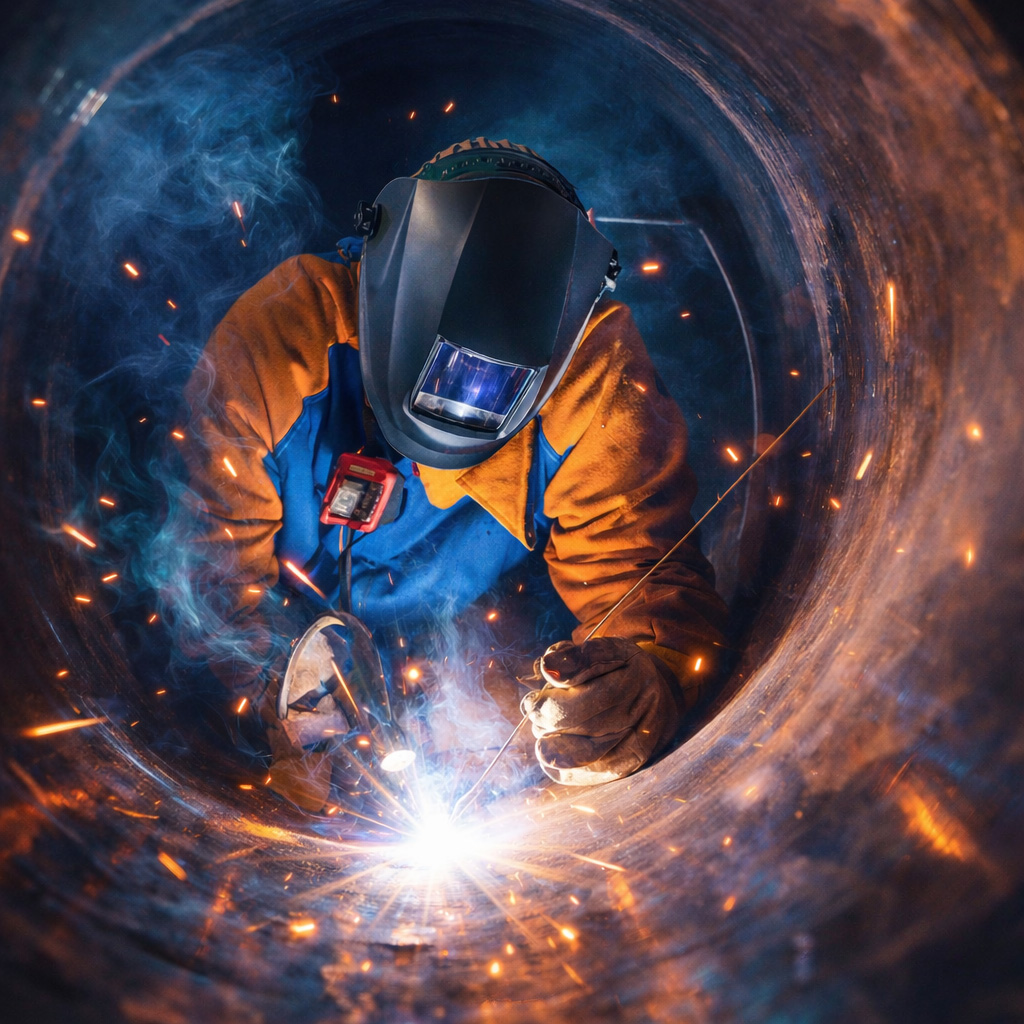
Ionization promotes the agglomeration of water molecules onto pollutants, increasing their volumetric density. This phenomenon makes particles heavier and reduces fume volatility: welding microparticles cluster into larger agglomerates that settle rapidly. These deposits on the ground are easier to clean than fine airborne dust, remaining outside the workers’ breathing zone.

ENERGY EFFICIENCY
Unlike traditional high-airflow ventilation systems, IonShield technology acts locally at the source by neutralizing fumes through physical interaction. By limiting dispersion, it significantly reduces the need for large-scale air extraction and, consequently, the associated energy consumption.
Up to 50%
reduction in GHG emissions related to heating
By reducing ventilation and heating requirements, IonShield lowers energy consumption in industrial environments.

Intelligent Monitoring Platform
Our future platform will enable users to monitor the performance of their IonShield systems in real time. Interactive dashboards will provide visibility into particle capture efficiency, air quality, energy savings, equipment status, and preventive maintenance requirements, helping organizations continuously optimize their operations.